

Robots aren't waiting on a smarter brain. They're waiting on a way to make the brain's mistakes affordable.
A deterministic safety layer changes that math.
THE TAKEAWAY
Most robot demos aren't deployed yet because they aren't reliable enough around people, not because they aren't smart enough. Waiting for a smarter AI model is a slow, expensive way to buy reliability. A deterministic safety layer changes the picture. It's a separate piece of software that checks every command before the robot moves. When a bad command means a smooth slowdown or steering around an obstacle, instead of a collision or freezing in place, the AI brain you already have may be good enough to ship.
WHY AREN'T MORE ROBOTS DEPLOYED?
More robots aren’t deployed today because most of them aren't reliable enough yet. Robot demos are everywhere. Robots doing paid work around people, in places nobody mapped, are still very rare. Bessemer Venture Partners summed it up in their April 2026 robotics outlook: capability is having its "GPT-2.5 moment," but deployment is early. And, "Getting from 80% task success to 99.9% is not a linear problem." [1]
Here's why. Say your robot gets each step of a task right 95% of the time. If the steps are independent, a ten-step task succeeds only about 60% of the time (0.95 to the tenth power). To finish that same ten-step task 99.9% of the time, every step has to be right about 99.99% of the time. That is a big ask from an AI.

That's the crux of the deployment gap. But look at what a "miss" means. Most of the time the problem isn't that the brain is dumb. It's that around people, every miss has to be treated as a possible injury. That's the bar that makes 99.99% per step necessary.
A safety floor changes which misses count. A wrong command now costs a slowdown, a detour or a retry, not an injury. So the brain only has to be reliable enough to be worth paying for. It doesn't have to be safe on its own. Those are, and should be, very different bars.
Won't the next AI model fix it?
It'll help. But there are three reasons I wouldn't bet a ship date on it.
- The newest model is always the expensive one.
Frontier models cost a lot to build, and that cost gets recovered from the people who deploy them, in license fees, in bigger computers on the robot or both. - Compute is finite.
A robot runs on a battery and a fixed compute budget. Every cycle spent reasoning is a cycle not spent reacting, and bigger brains make that squeeze tighter. - Smarter isn't the same as safe.
Even the people building the best robot brains say so. Tesla's head of AI, Ashok Elluswamy, put it bluntly on X in September 2026: "AI safety for physical robots makes the current crop of AI safety for large models look like child's play." [2]
You don't make an AI safe by making it smarter. You make it safe by putting a safety layer under it.
What if "good enough" AI is the new normal?
Then the robots that win will be the ones that can ship with it. Our COO, Peter Knapp, raised this point recently, and I think most of the robotics industry is missing it.
The bear case on AI goes like this: several model companies are competing hard, which keeps pressure on prices, and for a lot of business work, last year's model is good enough. You could hear a version of it at Salesforce's Dreamforce conference in September 2026. "The majority of agentic outcomes aren't driven by frontier capabilities," Tim Sanders, chief innovation officer at software-review site G2, told CNBC. "They're driven by last year's AI." [3]
To be fair, that was about routine sales and customer-service software, not robots. But the logic carries. If a robot maker has to wait for (and pay for) the next model before the robot is safe enough to ship, the business case keeps sliding to the right. ROI gets harder to reach, and adoption slows.
Flip it around. If last year's brain can do the job once something else handles safety, the next model becomes an option, not a requirement. You buy it for what it lets the robot DO NEXT, not to try to keep the robot safe so you can deploy it for the first time.
What is a deterministic safety layer?
I had a boss once who, when anyone would propose a shortcut, would quietly say “The bridge must stand.” We didn’t build bridges. He was pointing out that someone has to make sure the goal is achieved.
A deterministic safety layer is the part that makes sure the bridge stands. It's a separate piece of software between a robot's brain and its motors, and we call it a floor. It checks every command, whether it comes from an AI, a person or a teleoperator, against what the sensors see before the wheels move. And instead of only slamming on the brakes, it's designed to slow and steer so the robot keeps moving inside safe limits and stays on task. (Part 2 of this series goes deeper on what "deterministic" means and why it matters.)
Think of the driver-assist systems in a modern car: emergency braking, lane keeping, stability control. None of them makes anyone a better driver. They make the car safer no matter who is driving.
That's what LuciCore does on power wheelchairs today, and what it's built to do for any wheeled robot. Your AI or planner decides where to go. LuciCore is designed to get the robot there without hitting people or things, rolling off a curb or tipping over, through unmapped, people-filled spaces. We’ve proven we can do it indoor, outdoor, day and night across 44 states and 4 Canadian provinces.
Researchers building advanced robot autonomy on the LUCI SDK today describe it like this:
"By integrating LUCI as our deterministic safety layer, we can deploy the latest physical AI advancements without violating safety guarantees, and without letting safety constraints cap performance."
— Taskin Padir, Professor of Electrical and Computer Engineering and Founding Director, Institute for Experiential Robotics, Northeastern University
To be clear about what it isn't: a floor doesn't make a brain smart. If your model picks the wrong destination, LuciCore will get you safely to the wrong place. What the floor does is take the long, expensive tail of safety problems off the brain's plate, so the brain can ship at good instead of perfect. So that the brain can get to work.
"Don't robots already have safety systems?" you ask. Some do. Warehouse robots use safety-rated scanners that stop the robot anytime something enters a protective zone (read – anyone gets close), and open-source stacks like ROS 2 Nav2 include a collision monitor to stop movement when things are unexpected. Other systems define safe zones with cameras installed in the building, or stop the robot and hand it to a remote operator. Those can work well in mapped, controlled spaces with enough customization and tuning. LuciCore is built for the places they struggle: unmapped, crowded spaces with no installed infrastructure, where stopping isn't always safe either, and where curbs, drop-offs and slopes matter as much as obstacles.
How does a safety layer change robot ROI?
Here's what we expect to change for a robot maker when safety lives in its own layer:
- You can ship sooner.
Revenue starts when the robot ships, not when the model is perfect. - You can right-size compute.
LuciCore runs light enough to share compute with your stack. You don't need a top-end GPU just to keep the robot safe. - The brain becomes a component you choose.
LuciCore is designed to be model-agnostic. Pick, upgrade or swap brains on capability and price, and the safety function underneath stays the same. - Brain makers get to compete on what they do best.
An OEM that doesn't need the brain to carry the whole safety case can say yes to a brain faster, and brain makers compete on what their model can do.

The bigger picture
The floor isn't a bet against better brains. It's what lets each new brain ship as soon as it's ready, instead of after another safety cycle. That's why I think it's one of the most important layers in physical AI, whichever way the AI cycle goes.
- If models keep getting smarter, robots take on more work in more places, and each of them needs a floor. Better brains raise the need for deterministic safety.
- If models get cheaper and more alike, the deciding question becomes "can I deploy it?" The floor answers that for every brain.
We proved our safety layer in a regulated medical device, with a person aboard: 100,000+ miles on FDA-registered power wheelchairs since 2020, developed under IEC 62304, with zero FDA-reportable adverse events to date.
Bringing it to other wheeled robots is the work we're doing now. Part 2 covers why that record carries over.
Frequently asked questions
What is LuciCore?
LuciCore, from LUCI Mobility, is a deterministic runtime safety and local-navigation software layer for wheeled mobile robots. Your AI decides where to go, and LuciCore is designed to get the robot there without hitting people or things, rolling off a curb or tipping over. It has shipped on FDA-registered power wheelchairs since 2020.
Does LuciCore replace my robot's AI?
No. Your AI or planner, including ROS 2 and Nav2 setups, plans the mission and picks the goal. LuciCore sits underneath it, handles the next several meters and checks every command before it reaches the motors.
Will a safety layer make my robot timid?
It's designed not to. LuciCore slows and steers so the robot keeps moving when it's safe to, and stops when stopping is the safe choice. A robot frozen in a doorway or a crosswalk can create its own hazard.
What kinds of robots is LuciCore for?
It's designed for wheeled robots, including zero-turn designs, that work around people in unmapped places such as hospitals, homes, sidewalks and airports.
I build robot brains. Why should I care?
Because your OEM customers have to solve safety before they can say yes to your model. With a floor underneath, they can judge your brain on what it can do, not on whether it can be trusted near people, and safety stops being something every deal has to solve from scratch. We're glad to work with brain makers on reference integrations.
Let's talk
If you have a robot that works in the lab and stalls on the way to customers, I'd like to hear about it. Bring your robot, your brain and your ship date, and we'll tell you honestly whether LuciCore fits. info@luci.com
About LuciCore
LuciCore, from LUCI Mobility, is a deterministic runtime safety and local-navigation software layer for wheeled mobile robots. It sits between a robot's AI and its motors: the AI decides where to go, and LuciCore is designed to get the robot there without hitting people or things, rolling off a curb or tipping over, through unmapped, people-filled spaces. LuciCore combines LUCI Sensors (on-device fusion of depth, radar, ultrasonic and IMU data), LUCI Safety (deterministic collision, drop-off and tip avoidance) and LUCI Nav (local navigation for the next several meters), and connects to your AI through the LUCI SDK. It runs on Linux, light enough to share compute with your stack. Shipping on low-cost NXP i.MX; proven on NVIDIA Jetson. LuciCore has shipped on FDA-registered power wheelchairs since 2020 and is developed under IEC 62304, with zero FDA-reportable adverse events. LUCI Mobility is headquartered in Nashville, Tennessee, with engineering in Denver, Colorado.
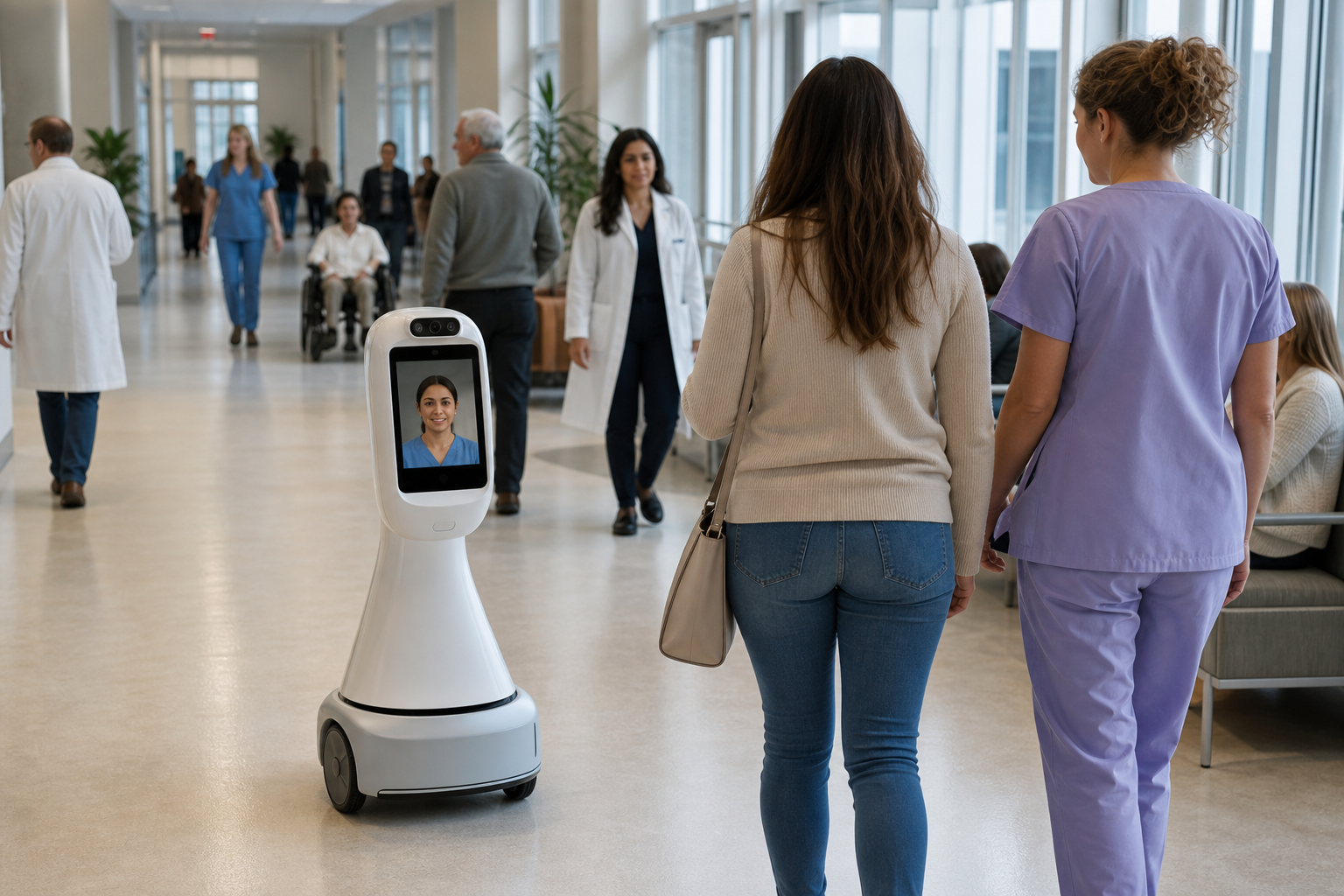
PART 1
YOUR ROBOT'S BRAIN MAY ALREADY BE GOOD ENOUGH TO SHIP
Robots aren't waiting on a smarter brain. They're waiting on a way to make the brain's mistakes affordable. A deterministic safety layer changes that math.

PART 2
A FLOOR ANY BRAIN CAN STAND ON
Why a proven, deterministic safety layer lets your robot ship before its AI is perfect and accelerates your ability to learn in the field.
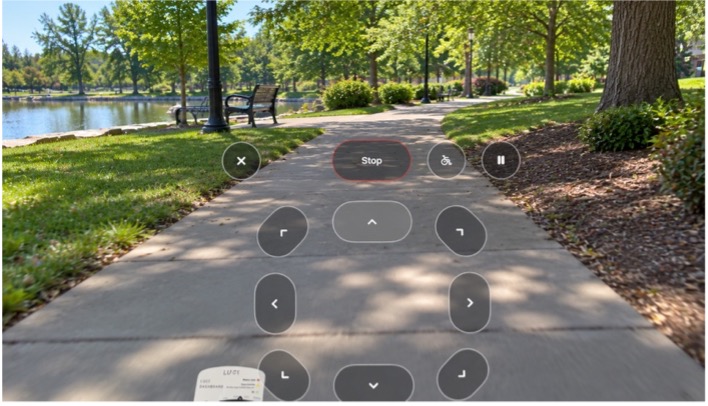
PART 3
BUILD WHAT MAKES YOUR ROBOT DIFFERENT. LICENSE WHAT MAKES IT SHIPPABLE
What it really takes to make a mobile robot safe around people, and how licensing LuciCore is designed to take years off the schedule.
1. J. Levine, T. Goldberg, J. Teng Wade et al., Bessemer Venture Partners, "Bessemer Predicts: Robotics and physical AI," Apr. 16, 2026. https://www.bvp.com/atlas/bessemer-predicts-robotics-and-physical-ai
2. S. Sen Bhattacharjee, "Elon Musk agrees viral robot moves were 'essentially remote controlled'; Tesla AI chief warns robot safety is a bigger challenge than AI safety," Benzinga, Sep. 21, 2026. https://www.benzinga.com/markets/tech/26/09/61889443/elon-musk-agrees-viral-robot-moves-were-essentially-remote-controlled-tesla-ai-chief-warns-robot-safety-is-a-bigger-challenge-than-ai-safety
3. C. Tolomia, "Dreamforce 2026: Business leaders say AI is moving too fast," Quartz via Yahoo Finance, Sep. 18, 2026 (quoting remarks to CNBC). https://finance.yahoo.com/technology/ai/articles/dreamforce-2026-business-leaders-ai-120114609.html
Leave a Reply